
Go2Appraiser Call 470.642.0232

Insurable Value: What It Would Cost to Rebuild Your Home

Replacement cost new: what it would cost to rebuild this house today with similar construction, which is how a policy settles a dwelling loss. It is not market value and it is not what the house would sell for. The land is excluded, because the land does not burn.
Assignment parameters

What this assignment is scoped to do, stated before you engage.

Intended use
Evaluating the dwelling coverage on a home, including in discussions with a current carrier or one being shopped.
Intended user
The owner, and the agent or agency advising them. A carrier shown the report may read it without being a named user of it.
Effective date
The date of inspection.
Scope of work
Interior and exterior inspection, measured to the ANSI standard, with the construction and finish quality that drives cost recorded and photographed.
Report format
Narrative, with the itemised cost build, the floor plan sketch, photographs, and a USPAP certification.

What the number is, and what it is not

Market value answers what a buyer would pay for the property. Insurable value answers what it would cost to put the building back. They are different questions with different answers, and in most of Georgia they are not even close to each other.

The land is excluded from this figure entirely. So is anything a policy handles separately. What is left is the building: foundation, framing, roof, exterior, interior finish, mechanical systems and fixtures.

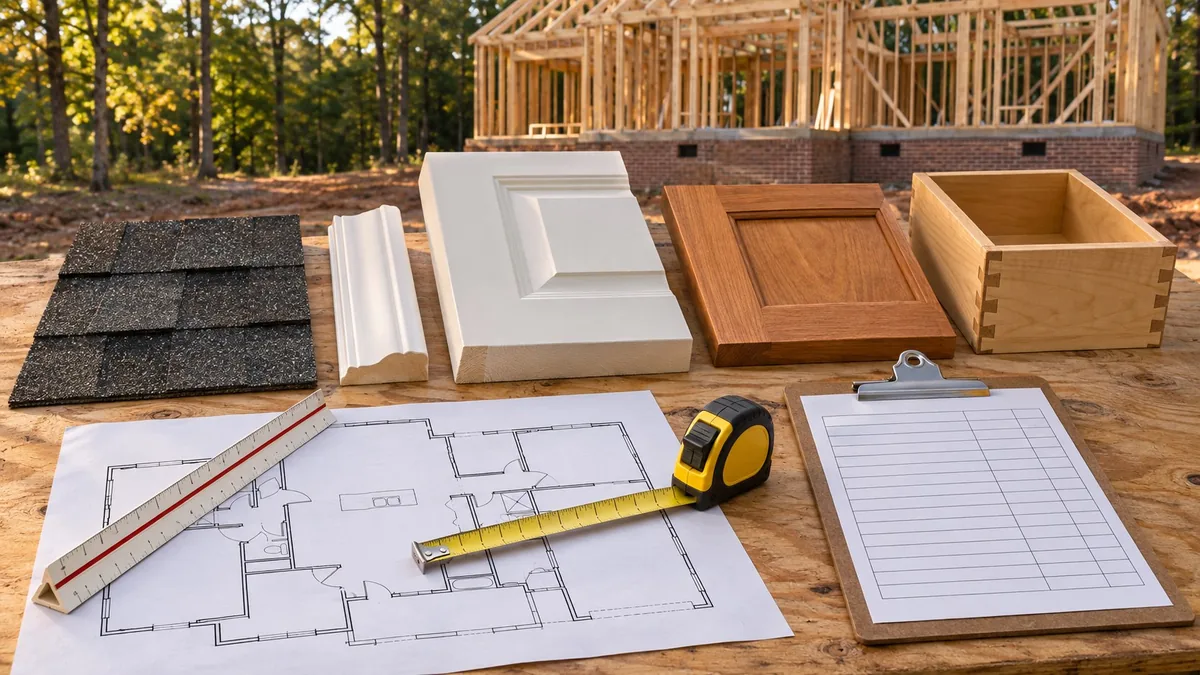
Illustration. A floor plan, a folding ruler, a tape measure and a clipboard on a bench, alongside roof shingle samples, a length of trim, two cabinet doors and a drawer box, with a house under framing in the background.
Illustration. The rebuild is priced component by component, not estimated as a whole.

Why the carrier's number and this one differ

A carrier's replacement cost estimate is a software output. It takes square footage, a quality grade and a year built, and returns a total. It is fast, it is consistent, and it cannot see the inside of the house.

Door construction, trim, ceiling heights, cabinetry, the actual finishes: these move a rebuild cost substantially and none of them reaches the software unless somebody walks the house and records them. That is the gap this appraisal fills.

How the figure is built

Component by component, priced from a published residential construction cost source and adjusted to the county the house sits in. Each line shows the quantity, the cost behind it and the source, so the total can be followed rather than taken on trust.

The standard I hold every report to is that another appraiser could follow the work and arrive at the same place. On a figure that may end up in front of a carrier, that is the only standard worth having.

Lower is not the goal. Accurate is.

People sometimes arrive hoping for a smaller number and a smaller premium. That is not what this is. An appraisal that understates a rebuild has simply moved the problem to the worst possible day.

What the report gives is a documented, itemised basis to compare against any carrier's figure. Sometimes that supports a lower dwelling limit. Sometimes it shows the house is carried well below what rebuilding it would take. Either way the owner is no longer arguing with a total they cannot see inside of.

Ordinance or law, and debris removal

Policies commonly carry ordinance or law coverage and debris removal as separate items. The report prices the rebuild itself and keeps those out of the core figure, so the two are not confused with one another.

The inspection

Plan on thirty to forty five minutes. Every room on every level, and the garage. I take my own measurements to the ANSI standard rather than relying on the county's square footage, and I photograph throughout. This is not a home inspection and it is not a code inspection.

There is no reason to clean, tidy or stage. Whether the dishes are done does not enter the report and does not touch the number. Personal photographs, religious items and anything else identifying the people living there are cropped or blurred out of the report photographs.

Ask questions while I am there. Most appraisers walk in, take pictures and leave without saying much. I would rather you finished the visit knowing what I was looking at and why it moves the figure.

What comes with the report

A narrative report showing every component, the quantity, the cost and the source. A floor plan sketch, which is included and yours to use afterwards, with an agent or on your own. Full photographs, my qualifications, the independence statement and a USPAP certification.

The report and the photographs go to the owner and to whoever the engagement names, and to nobody else. Not to a management company, not to an appraisal data portal, not to the county. Nothing here touches a tax assessment, and nothing appears in MLS or any public record.

For agents and agencies

An agent who sends a client here is not handing off the relationship. The intended use is the client's evaluation of their own dwelling coverage, the engagement names who may rely on the report, and the conclusion belongs to the analysis rather than to whoever asked for it.

That independence is the point rather than a disclaimer. A figure that bends toward whoever paid for it is worth nothing to the client in a dispute, which is exactly when they need it to hold. I have performed, reviewed, consulted on and supervised insurable value and property damage assignments.

What I am, and what I am not

I am an appraiser, and that is the whole of what I do here. I am not a building or repair contractor, a public adjuster, a home inspector or a mold assessor, and I do not perform or manage repair work.

Repair scopes, remediation reports and clearance testing come from those professionals. My report relies on them and says so. What I bring is the value: what the property was worth, what it is worth now, and the market evidence behind the difference.

Questions people actually ask

Is insurable value the same as market value?

No, and in most of Georgia the two are not close. Market value answers what a buyer would pay for the property. Insurable value answers what it would cost to rebuild the building with similar construction, which is how a policy settles a dwelling loss.

The largest single difference is the land. Market value includes it; insurable value excludes it entirely, because the land does not burn. Location drives much of market value and barely touches what materials and labour cost to put the structure back.

My carrier says it would cost a certain amount to rebuild my house. Can an appraisal check that?

Yes, and that is most of why this assignment exists. A carrier estimate is a software output built from a few inputs, commonly square footage, a quality grade and the year built. It returns a total without showing the reasoning behind it.

An appraisal builds the figure component by component from a published residential construction cost source adjusted to your county, with the quantity, the cost and the source on every line. That gives you a documented basis to compare against the carrier number and to question any part of it. Sometimes it supports a lower dwelling limit, and sometimes it shows the house is carried well below what rebuilding would actually take.

470.642.0232

You will reach Scott directly. Expect questions about intended use and effective date before a fee is quoted.

Discuss an insurance or damage assignment
Appraiser
Scott D.W. Wiley
Certification
Georgia Certified Residential Real Property Appraiser, CR432840
Coverage
Metro Atlanta and Northwest Georgia.
Practice
Private-client assignments only. No lender or GSE work.