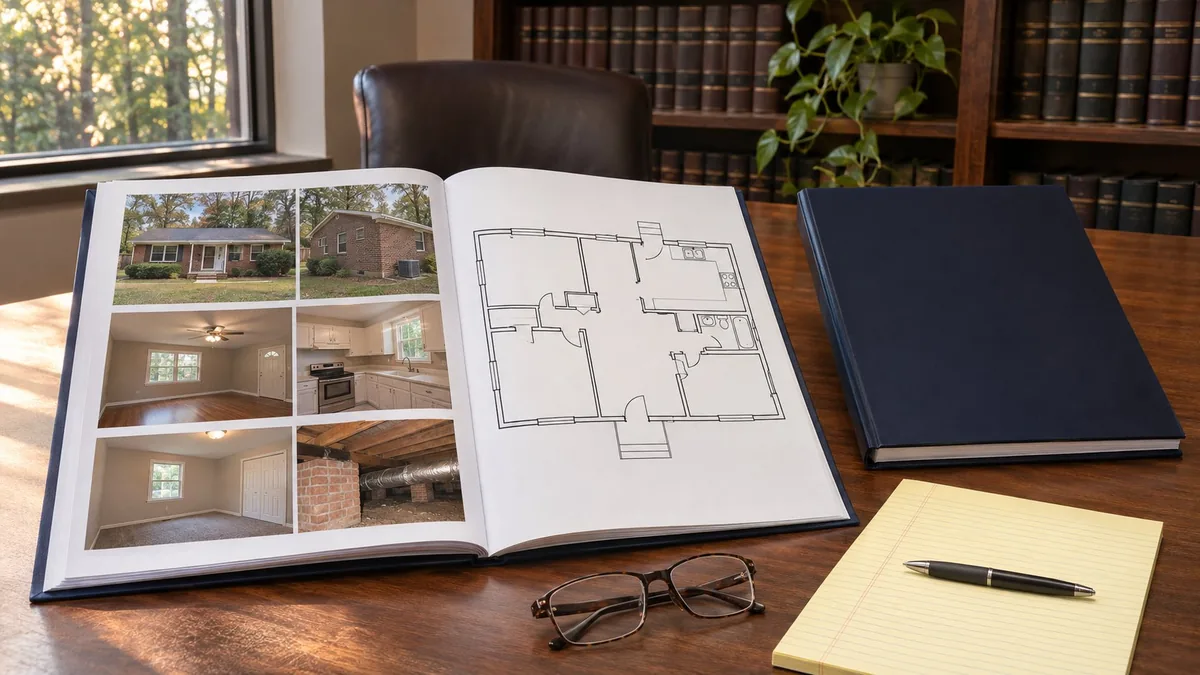
Property damage and insurance files
Diminution in value work arrives either as a claim that has stalled or as a case already in suit. The valuation question is the same in both: a value for the property without the loss, a value for it as repaired, and local sales showing what buyers paid for comparable homes with and without that history. A percentage from a national study is not evidence about your client's house, and it does not survive examination.
There is no default effective date. The intended use you identify at engagement sets both the date and the type of value, and a value resting on a condition that does not exist on that date is disclosed as a hypothetical condition, one resting on a condition not yet known or completed as an extraordinary assumption. Both appear on the face of the report.
It is worth knowing that this is not limited to physical damage. The same method applies where an undisclosed restriction, an easement or encroachment found after closing, a title defect or a later zoning or permit problem takes value while nothing about the house is broken.
What to send at intake: the date of loss, the repair scope or contract, remediation and clearance reports where water or mold were involved, photographs taken before and during the repair, the permit record where one was required, and the policy declarations page where the assignment touches coverage. None of it is a condition of acceptance. What is missing is handled by disclosure rather than by guesswork.
I report what I observe and state the limits of my licensure. I do not test for mold, I do not produce cause and origin reports, and any cost figures I develop are appraisal cost estimates set beside whatever bids you provide, never a substitute for a contractor's bid.
The two pages behind this work are diminution in value after property damage and insurable value.