Go2Appraiser Call 470.642.0232

Diminution in Value After Property Damage

Diminution (dim-ih-NEW-shun) in value is the loss that survives the repair. The contractor finishes, the invoice is paid, and the property is still worth less than it was, because buyers discount a house with a known history. Measuring that is a separate piece of work from fixing anything.

Assignment parameters

What this assignment is scoped to do, stated before you engage.

Intended use
Supporting a property damage claim, a dispute over one, or litigation arising from it.
Intended user
Set at engagement. Commonly the owner, counsel, an agency or an adjuster.
Effective date
Set by the intended use, not by default. Retrospective dates of loss are routine.
Scope of work
Inspection in person, after the repair where there has been one, with the repair scope and any remediation records analysed against local sales.
Report format
Narrative, developed to carry scrutiny, with every hypothetical condition and extraordinary assumption disclosed.

What diminution in value means

Diminution in value is the real estate term. Diminished value is the phrase most people search, because it is what the same idea is called when a car is involved. The subject here is real property: a house, a condominium, land with improvements on it.

The question it answers is narrow and specific. Not what the repairs cost. Not what the house is worth in general. How much less the property is worth because of what happened to it, measured against what it would have been worth had nothing happened at all.

Illustration. A finished living room in sunlight, with a sofa, a lamp on a side table, a framed landscape and a hardwood floor, looking through an open doorway down a hall to the front door.
Illustration. The repair is finished. The history is not.

Stigma: the part that survives a good repair

Stigma is the portion of the loss that a perfect repair does not cure. A buyer who learns a house had a fire, a flood or a mold remediation prices that knowledge in, whatever the contractor achieved. Two houses can be physically identical and sell for different numbers because one of them has a history and the other does not.

Proving that is the job, and it is where this work is most often done badly. A percentage taken from a national study is not evidence about a particular house in a particular market. What holds up is local sales: what buyers in this market actually paid for comparable homes with a disclosed history, set against what they paid for comparable homes without one.

What is actually measured, and as of when

There is no single default. The client's intended use, identified at engagement, sets both the effective date and the type of value. The combinations ordered most often are the value before the loss as of the date of loss; the current value as is, damaged; the current value as if never damaged; the value during repair, while the work and its outcome are still uncertain; and the value as repaired, whether the repairs are finished or not yet done.

Diminution itself is measured between a before or unimpaired value and the as repaired value. Owners and their attorneys usually need the before value and the loss. Insurers often need the current as is or during repair value. Either side can order any of them.

Two disclosures matter here and counsel will look for both. A value resting on a condition that does not exist on the effective date is disclosed as a hypothetical condition. A value resting on a condition not yet known or not yet completed is disclosed as an extraordinary assumption. They appear in the report, labelled, rather than being quietly folded into the conclusion.


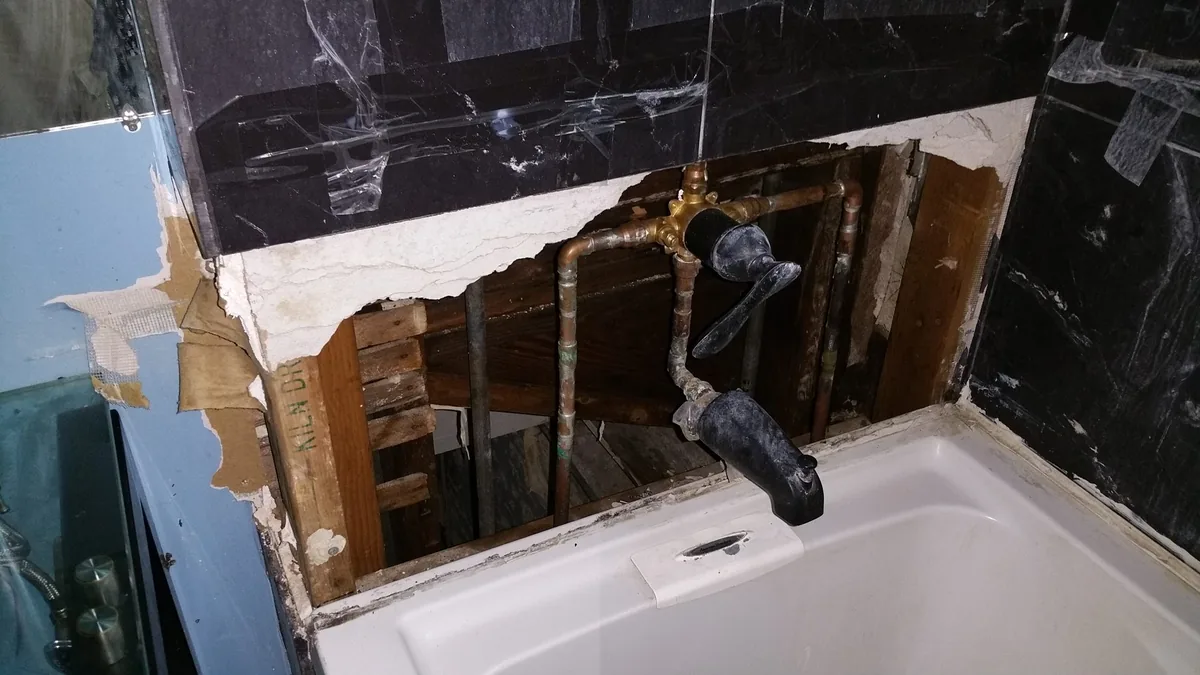
Bathroom wall opened above a bathtub, exposing copper supply pipes and a valve behind the tub surround.
A tub surround opened to reach the supply lines.

Where Georgia law sits, as general information

Georgia courts have recognised diminution in value as a measure of loss on property claims. That is general information about the law and nothing more. It is not legal advice, it does not describe how any particular policy operates, and nothing on this page predicts what any claim will recover.

What an appraisal contributes is the valuation question, answered independently and supported well enough to survive examination. How the law applies to a specific claim is a question for the attorney handling it.

Fire and smoke

Fire files bring the widest gap between what was repaired and what the market does with it afterwards. Smoke travels further than flame, remediation quality varies, and the disclosure follows the house.

I do not produce a cause and origin report and I do not need one. I report what I observe, state the limits of my licensure plainly, and develop cost estimates within the scope of an appraisal, set side by side with any contractor bids or contract estimates provided. Those are appraisal cost estimates and the report says so; they are not contractor bids and must not be read as a substitute for one.

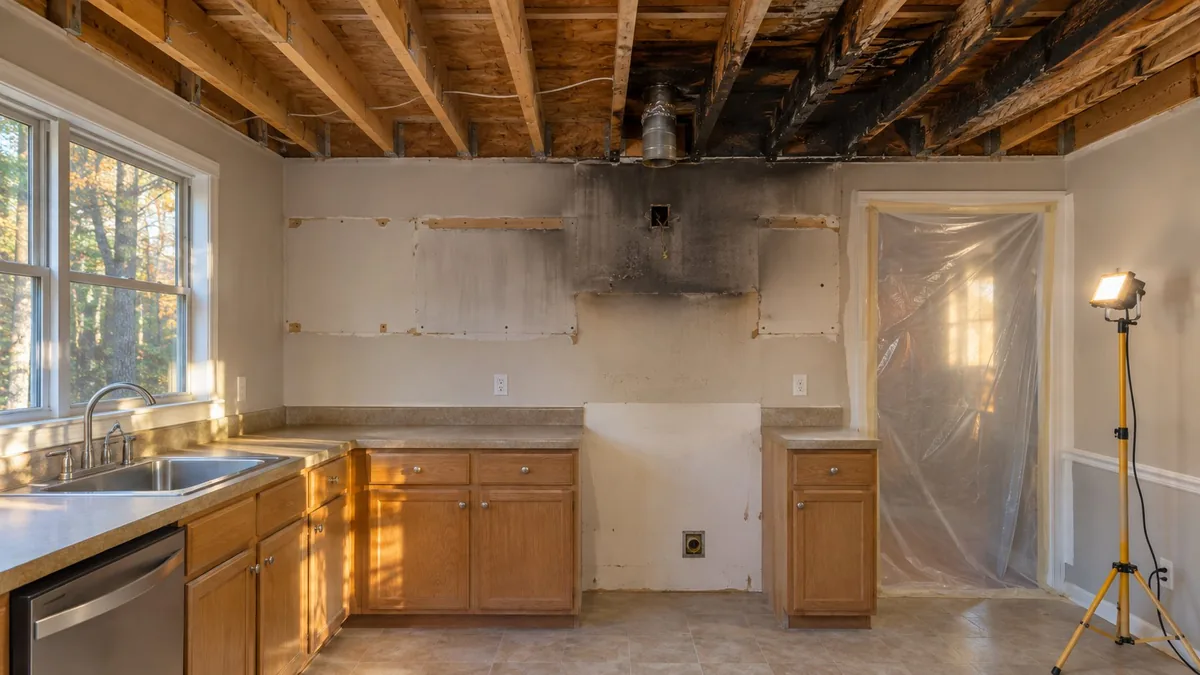
Illustration. A kitchen stripped back after a fire, with charred ceiling joists exposed, heavy soot on the wall where the upper cabinets had been, the lower cabinets still in place, and plastic sheeting closing off the next room.
Illustration. Smoke reaches further than flame, which is part of why the market prices a fire history the way it does.

Flood and water

Water losses are judged by the market on what the water reached and how long it stayed. Clean supply water caught quickly and dried properly is a different conversation from standing water in a finished basement, and buyers treat them differently.

The documents that help most are the repair scope, the drying and moisture records if any were kept, photographs taken while the work was open, and the permit record where the repair required one.

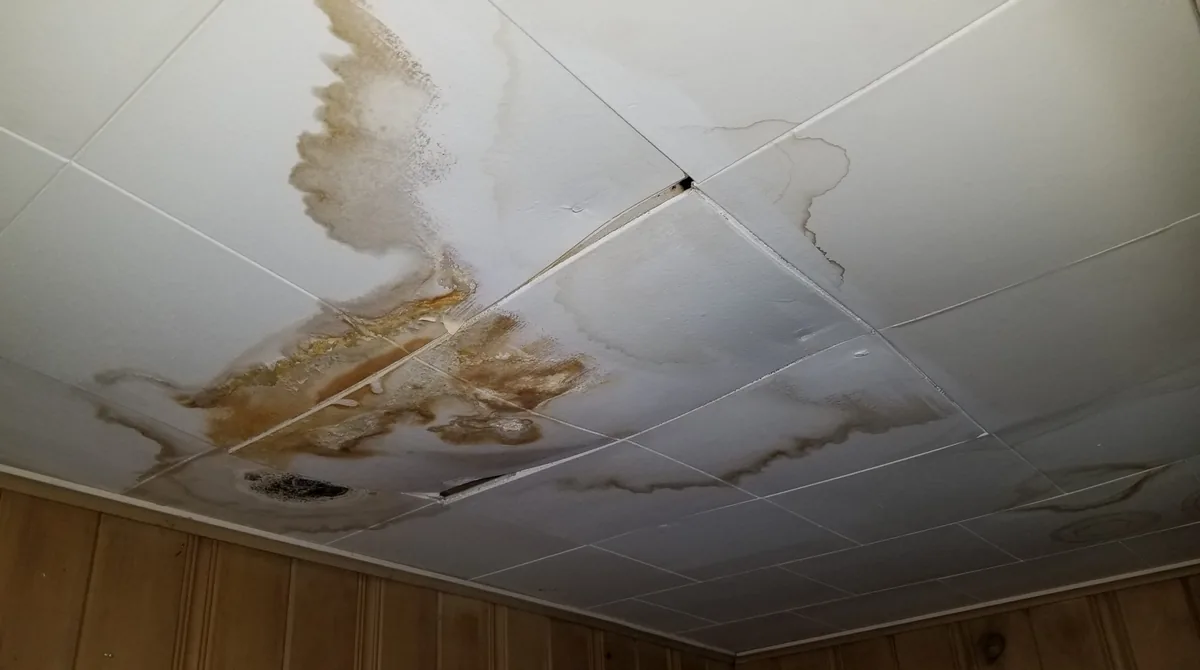
Suspended ceiling tiles with heavy brown water staining spreading across several panels, above a wood panelled wall.
Water staining spreading across a ceiling.

Mold

Mold carries the heaviest stigma of the three, and the least proportionate relationship between what a repair costs and what the market takes off.

I do not test for mold and I am not a mold assessor. A remediation report and clearance testing are preferred rather than required: they are often obtained beforehand depending on the extent of the damage, and they make the appraisal more accurate. Without them the as repaired value rests on a stated assumption, which the report discloses rather than hides.

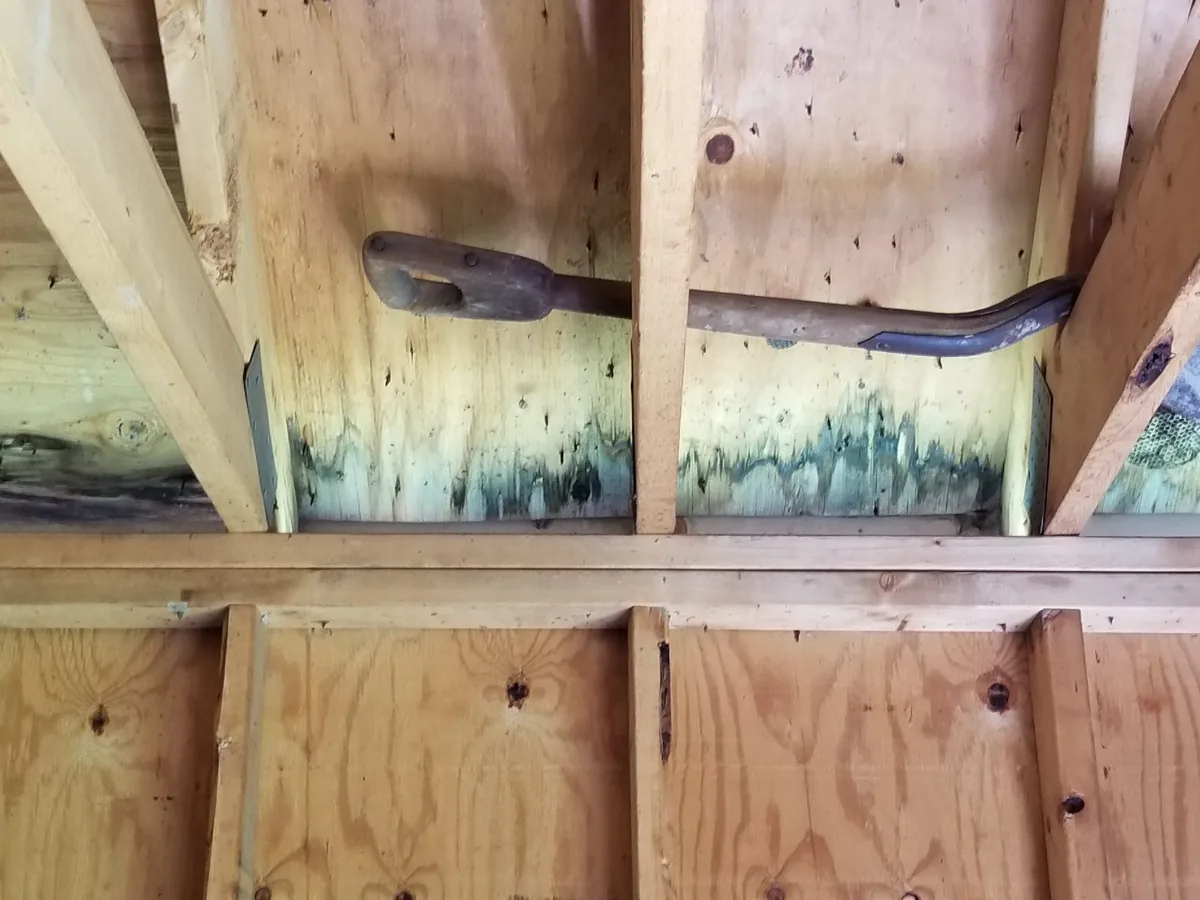
Underside of floor sheathing between joists, with green and dark surface growth spreading across the boards and a flexible duct running below.
Mold growth along framing and sheathing.

When the problem isn't physical

Diminution in value is not limited to damage. The same before and after method applies when a legal or use condition takes value from a property while nothing about the house is broken at all. The property is valued with the condition and without it, and the difference is the loss. The value without it is a hypothetical condition and is disclosed as one.

The categories this comes up in most often are an HOA or deed restrictions not disclosed at purchase; easements or encroachments found after closing; title defects; and zoning or permit problems discovered later.

This is attorney territory more often than not, and the engagement questions are the same ones that open any litigation file.

What to send

None of this is a condition of taking the assignment. It is what makes the analysis sharper, and anything missing is handled by disclosure rather than by guesswork.

The date of loss. The repair scope or contract. Remediation and clearance reports where the loss involved water or mold. Photographs taken before and during the repair. The permit record where one was required. And the policy declarations page where the assignment touches coverage.

What I am, and what I am not

I am an appraiser, and that is the whole of what I do here. I am not a building or repair contractor, a public adjuster, a home inspector or a mold assessor, and I do not perform or manage repair work.

Repair scopes, remediation reports and clearance testing come from those professionals. My report relies on them and says so. What I bring is the value: what the property was worth, what it is worth now, and the market evidence behind the difference.

Questions people actually ask

Can a house lose value after it has been repaired?

Often, yes. That loss is called diminution in value, and the part of it a good repair does not cure is called stigma. A buyer who learns a house had a fire, a flood or a mold remediation prices that knowledge in, whatever the contractor achieved.

Measuring it means comparing a value for the property without the loss against its value as repaired, and supporting the gap with local sales of comparable homes with and without a disclosed history. A percentage taken from a national study is not evidence about a particular house in a particular market, and it does not hold up when examined.

Does Georgia recognize diminution in value on home claims?

Georgia courts have recognised diminution in value as a measure of loss on property claims. That is general information about the law and nothing more. It is not legal advice, it does not describe how any particular policy operates, and nothing here predicts what any claim will recover.

How the law applies to a specific claim is a question for the attorney handling it. What an appraisal contributes is the valuation question, answered independently and supported well enough to survive examination. The page for attorneys sets out how an engagement through counsel works.

Do you test for mold?

No. I am an appraiser, not a mold assessor. I do not sample, test or clear anything, and I do not perform or manage remediation.

A remediation report and clearance testing are preferred rather than required. They are often obtained beforehand depending on the extent of the damage, and they make the appraisal more accurate because they establish what was found and what was done about it. Without them the as repaired value rests on a stated assumption, which the report discloses rather than hides.

Can a value be set as of the date of the loss?

Yes. A retrospective effective date is routine work on these assignments rather than an obstacle. The market data from that date still exists in exactly the form it always did, and the report states the retrospective basis plainly.

There is no single default, though. The intended use, identified at engagement, sets both the effective date and the type of value: the value before the loss as of the date of loss, the current value as is, the current value as if never damaged, the value during repair, or the value as repaired. A value resting on a condition that does not exist on the effective date is disclosed as a hypothetical condition, and one resting on a condition not yet known or not yet completed is disclosed as an extraordinary assumption.

Can a house lose value from something that is not damage?

Yes, and the method is the same. When a legal or use condition takes value from a property while nothing about the house is broken, the property is valued with the condition and without it, and the difference is the loss. The value without it is a hypothetical condition and is disclosed as one.

The categories this comes up in most often are an HOA or deed restrictions that were not disclosed at purchase, easements or encroachments found after closing, title defects, and zoning or permit problems discovered later. These are usually attorney matters, and the engagement questions are the same ones that open any litigation file.

470.642.0232

You will reach Scott directly. Expect questions about intended use and effective date before a fee is quoted.

Discuss an insurance or damage assignment
Appraiser
Scott D.W. Wiley
Certification
Georgia Certified Residential Real Property Appraiser, CR432840
Coverage
Metro Atlanta and Northwest Georgia.
Practice
Private-client assignments only. No lender or GSE work.